miguel's Notes
2026
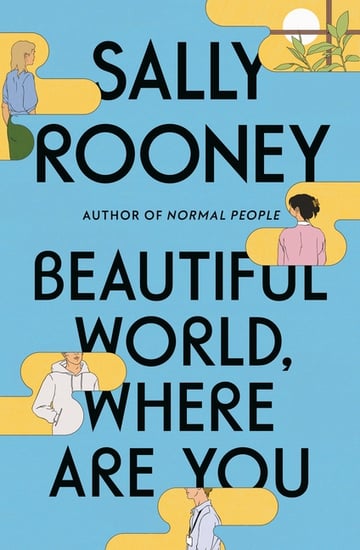
Beautiful World, Where Are You
By Sally RooneyUgly people trying to find the beauty left in the world; from relationships, from careers, from religion, from themselves. I’d hate to be a Rooney character because then I’d be miserable all the time. It’s weirdly fascinating to see how these characters navigate that misery. Kind of like staring at a car crash. Even though I don’t agree with some of their choices and lines of thinking, it was sort of fun and stimulating to “dialogue” with this unlikeable cast. After all they are the main sell of this book as the overall plot is pretty mundane. I still don’t want to be friends with them though (save for Simon maybe). The only turn off? The certain air of intellectual elitism. But all things considered I enjoyed this one, slightly more than Normal People.
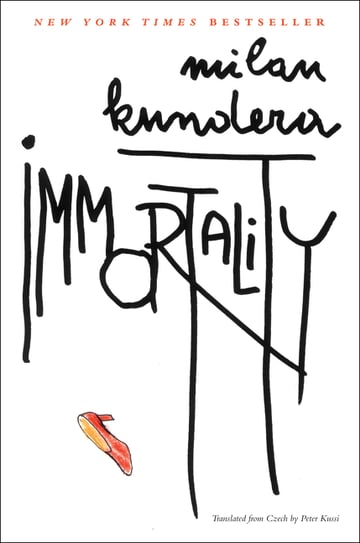
Immortality
By Milan KunderaMan reckons with immortality, and forgets to reckon with death.
Between this book, a film I recently watched, and recent life events, I’m surrounded by death—or at least adjacent to it. Here Kundera, in a sort of literary exercise, delves into the concept of immortality by telling a story within a story (within a story). The “narrator” conjures up an entire novel after seeing a woman at a swimming pool. Suddenly it’s a domestic drama where sisters covet each other’s lives and the men around them are helpless to their whims. Goethe and Hemingway also appear in an imaginary exchange in Heaven, the novel’s heartbeat. It’s definitely a lot to take in, especially with all the references, but Kundera rewards perseverance and ultimately I enjoyed pondering over the themes he tackled here. He’s also a funny writer.
Admittedly, it was a boring Valentine’s date with this book. In case anyone cared I pick my reads via a random number generator—and so here we are! Don’t get me wrong: great book, great writer. But thank God it’s over and I’m off to something easier on the mind.
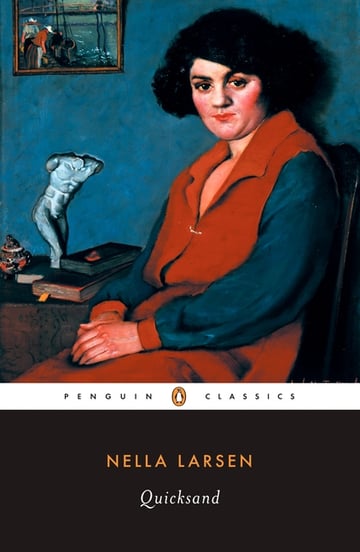
Quicksand
By Nella LarsenQuicksand and Passing are the only novels Nella Larsen wrote in her short-lived literary career. She returned to nursing some years later based on what I read online about her life. It’s somewhat unfortunate that there’s no more The Next Novel because these two stories highlight Larsen’s budding brilliance as a storyteller and historian.
In Quicksand, Helga Crane, a mixed-race woman, tries to escape her current life and start anew. She wounds up in Chicago and Harlem and then somehow in Copenhagen. It’s kind of like a psych drama; we spend a lot time inside the stormy mind of Helga. It took me a while to adjust to this story (and the writing), but by the end I was clutching my chest.
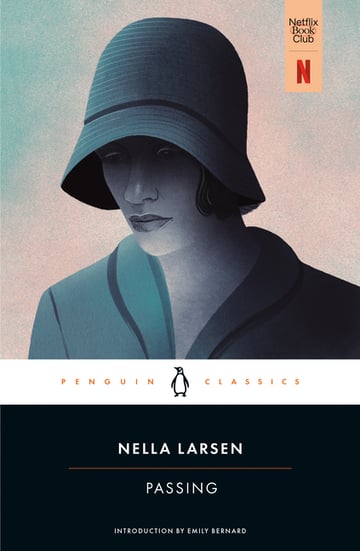
Passing
By Nella LarsenFor the first time she suffered and rebelled because she was unable to disregard the burden of race. It was, she cried silently, enough to suffer as a woman, an individual, on one’s account, without having to suffer for the race as well. It was a brutality, and undeserved.
Quicksand and Passing are the only novels Nella Larsen wrote in her short-lived literary career. She returned to nursing some years later based on what I read online about her life. It’s somewhat unfortunate that there’s no more The Next Novel because these two stories highlight Larsen’s budding brilliance as a storyteller and historian.
I know Passing from Rebecca Hall’s film adaptation. Irene reconnects with her childhood friend Clara, who now lives her life passing for a white person. Besides the leap in the quality of writing, I thought this story was more affecting, tragic as it is. And also here Larsen better tackles the intersectionality of race and class during that period of America. Kind of want to rewatch the movie now, especially for Ruth Negga.
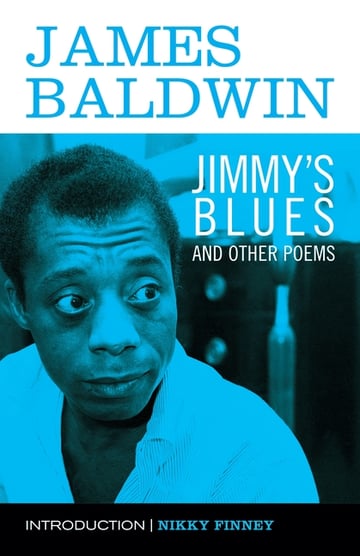
Jimmy's Blues and Other Poems
By James BaldwinI only know Baldwin from his books and plays—of course he also wrote poetry! I’ve never read anyone so attuned to living. These poems contain little, precious truths about the ways in which we live and ought to live, from the keen eye of a writer undaunted by life and pursued it with all the love and honesty he can muster.
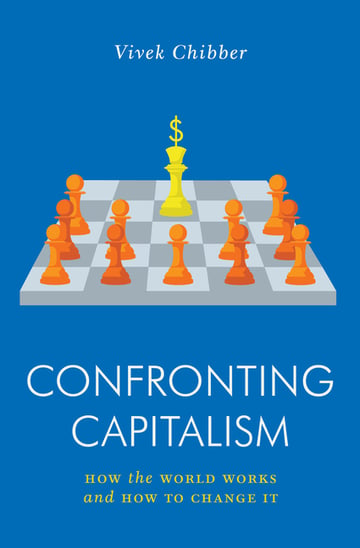
Confronting Capitalism
How the World Works and How to Change It
By Vivek ChibberCapitalism for dummies (complimentary) (it’s me, I’m the dummy)
Pretty straightforward like a primer. Chibber draws emphasis to the organization of the labor force in confronting capital. I also appreciated his use of uncomplicated language and simple analogies.

Another Morocco
Selected Stories
By Abdellah TaiaMy name is Abdellah: the slave, the servant of God. I freed myself from Morocco’s constraints (but really?). All that remains is to escape myself.
Banger read to start the year
Short stories in the sense that these are “short stories” from the author’s life, real or inspired, I can’t really confirm though I’m leaning towards the former—does it matter? Taïa recounts his journey from growing up poor in Morocco to feeling lost and desolate in Paris. It’s like reading someone’s old journal; the writing is unvarnished but poignant. Disappearing fathers, romance and heartbreak, Paul Bowles, and always, Morocco. In one of my favorite stories, Angels’ Terminal, the cynical protagonist questions why his new European friend finds Morocco so beautiful, when all his life he dreamt of leaving home. The entire collection can be summed up by this exchange. This desire to break free from one’s fate, even if it means letting go of everything you’ve known your entire life.